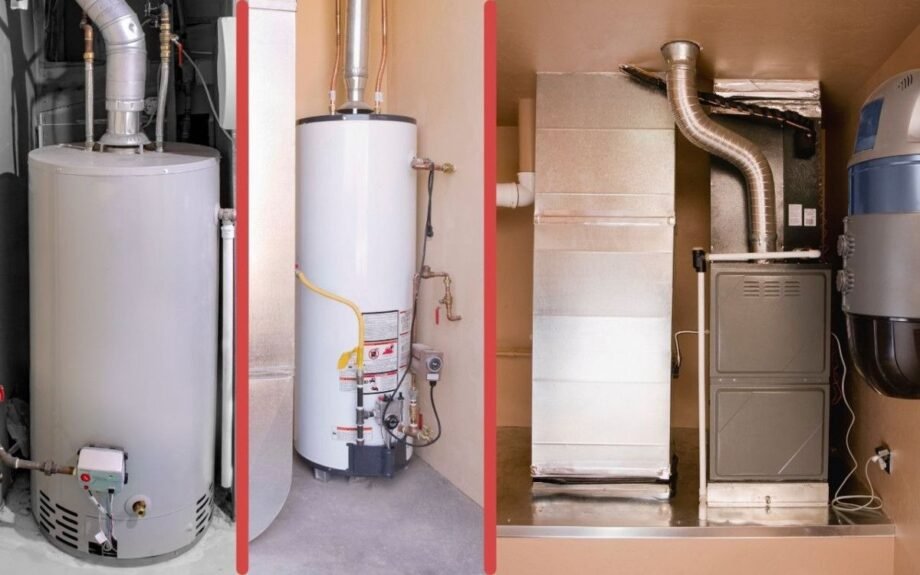
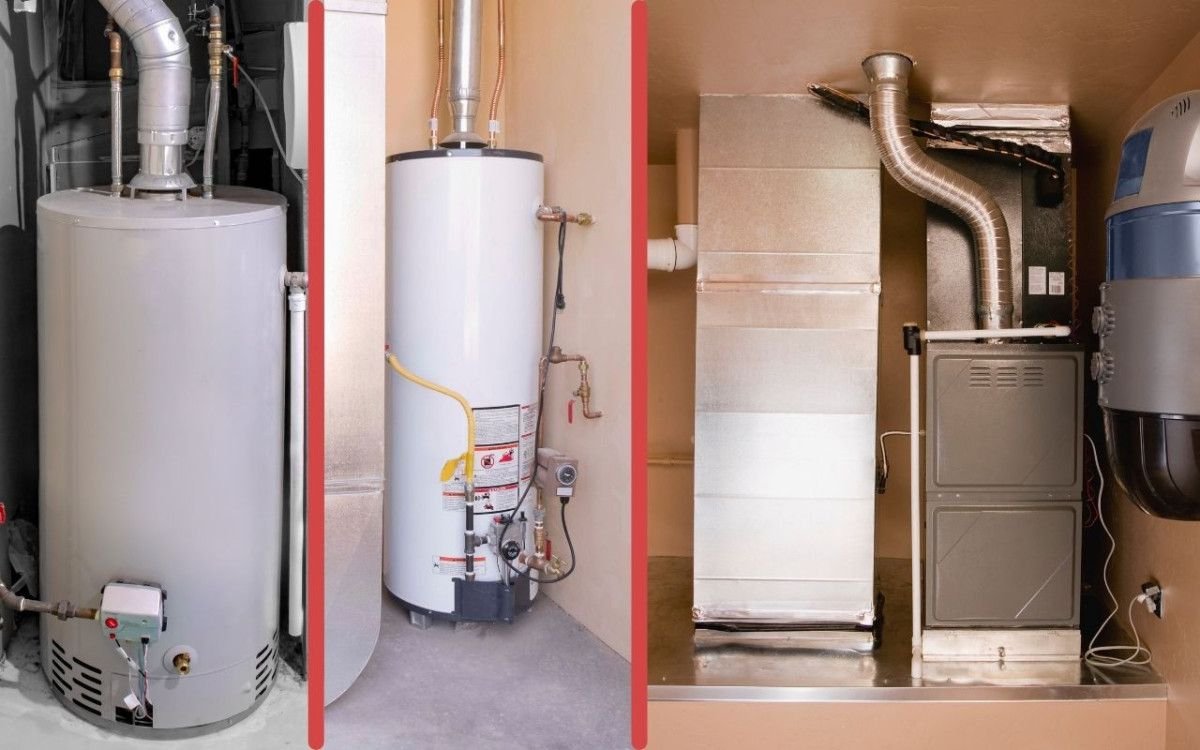

A non-condensing furnace — also called a conventional or standard-efficiency furnace — is a furnace with a single heat exchanger that extracts heat from the combustion gases once, then vents the remaining hot exhaust gases up a metal chimney or flue pipe. It does not cool the exhaust gases enough to condense water vapor, so the roughly 15% to 20% of the fuel’s energy that is trapped in the hot water vapor is lost. The U.S. Department of Energy classifies two types of non-condensing furnaces: low-efficiency systems with “natural draft,” a “continuous pilot light,” and “56% to 70% AFUE,” and mid-efficiency systems with an “exhaust fan,” “electronic ignition,” and “80% to 83% AFUE” (energy.gov).
A non-condensing furnace produces no liquid condensate. The water vapor from combustion stays in the vapor phase and goes up the chimney as steam. There is no secondary heat exchanger, no PVC vent pipe, no condensate drain line, and no condensate pump. The exhaust gas temperature is 300°F to 400°F — hot enough that a metal vent pipe or a masonry chimney is required. The defining characteristic of a non-condensing furnace is a single heat exchanger and a metal exhaust vent. If the furnace has two heat exchangers and a white PVC vent pipe, it is condensing. If it has one heat exchanger and a metal vent pipe, it is non-condensing.
Contents
The Two Types of Non-Condensing Furnaces: Low-Efficiency and Mid-Efficiency
| Feature | Low-Efficiency (56-70% AFUE) | Mid-Efficiency (80-83% AFUE) |
| Draft type | Natural draft — buoyancy carries exhaust up chimney | Induced draft — fan pulls exhaust through heat exchanger |
| Ignition | Standing pilot light — burns continuously | Electronic ignition — hot surface or spark |
| Vent pipe | Masonry chimney, typically unlined | Metal — B-vent or galvanized, 3-4 inch |
| Typical age | Pre-1990s | 1990s to present |
| Still manufactured? | No — phased out by efficiency standards | Yes — minimum legal efficiency for new furnaces |
| Heat exchangers | One — heavier cast-iron or thick steel | One — lighter, aluminized steel |
Natural Draft (Low-Efficiency): The Furnace That Never Shuts Off Its Pilot
A natural-draft furnace relies on the buoyancy of hot exhaust gases to carry combustion products up the chimney. There is no fan pushing or pulling the exhaust — the hot gases rise because they are lighter than the surrounding air. The DOE describes these as “natural draft that creates a flow of combustion gases” with a “continuous pilot light” and 56% to 70% AFUE (energy.gov). The standing pilot light burns a small flame continuously — 24 hours a day, 365 days a year — consuming roughly $5 to $10 per month in gas even when the furnace is not heating the house.
Natural-draft furnaces are obsolete. The DOE’s 2013 furnace efficiency standard effectively banned the manufacture of new natural-draft furnaces by raising the minimum efficiency to 78% to 80% AFUE, which a natural-draft design cannot achieve. The remaining natural-draft furnaces in service are all at least 30 years old and are at the end of their useful life. The DOE specifically recommends replacing “natural gas furnaces with pilot lights rather than electronic ignitions” (energy.gov).
Induced Draft (Mid-Efficiency): The Furnace That Drew the Line at 80%
The mid-efficiency induced-draft furnace is the modern non-condensing furnace. It uses a small fan — the draft inducer — to pull combustion gases through the heat exchanger and push them into the vent pipe. The DOE classifies these as “exhaust fan controls the flow of combustion air and combustion gases more precisely,” with “electronic ignition (no pilot light),” “compact size and lighter weight to reduce cycling losses,” and “80% to 83% AFUE” (energy.gov).
The inducer fan solves the fundamental problem of natural-draft furnaces: the chimney only works when it is warm. A cold chimney on a cold morning produces no draft, and the furnace cannot fire until the chimney warms up. The inducer fan pushes the exhaust out regardless of chimney temperature. The inducer also allows a smaller-diameter vent pipe — typically 3 to 4 inches of double-wall B-vent — because the fan produces positive pressure to overcome the pipe’s flow resistance. This smaller vent pipe allowed furnaces to be installed in locations where a full masonry chimney was not available, expanding the possible furnace locations to attics, crawlspaces, and interior closets.
The 80% AFUE ceiling is physical, not regulatory. A non-condensing furnace cannot exceed roughly 83% AFUE because it cannot condense water vapor without a secondary heat exchanger. The water vapor in the exhaust gas represents roughly 10% to 12% of the fuel’s total energy content. If the exhaust gas temperature stays above the dew point — around 130°F — that energy is lost up the chimney. The only way to break the 83% ceiling is to add a secondary heat exchanger that cools the exhaust below the dew point and condenses the water. That is the definition of a condensing furnace. The 80% furnace is the most efficient furnace possible without condensation.
Why Non-Condensing Furnaces Still Exist: Lower Cost and Simpler Installation
The non-condensing furnace costs less to purchase — $1,500 to $3,000 versus $3,000 to $6,000 for a condensing furnace of the same BTU capacity. It costs less to install because there is no condensate drain line to run, no PVC vent pipe to route to an exterior wall, and no condensate pump to install and wire. The installation labor is roughly 2 to 4 hours less for a non-condensing furnace than for a condensing furnace — a savings of $300 to $600.
The non-condensing furnace also eliminates the condensate-freezing problem that affects condensing furnaces in unconditioned attics and crawlspaces. A non-condensing furnace has no water to freeze. In very cold climates, this reliability advantage — no condensate, no freezing, no condensate-related shutdowns — is the reason some homeowners choose an 80% furnace over a 95% furnace despite the higher operating cost. The DOE acknowledges this trade-off, noting that “it usually makes sense to invest in the highest-efficiency system” in cold climates, but that in milder climates “the extra investment required to go from 80% to 90% to 95% efficiency may be hard to justify” (energy.gov).
The Downsides: Higher Operating Cost and Draft Hazards
The non-condensing furnace costs more to operate than a condensing furnace — roughly 15% to 18% more gas for the same amount of heat delivered. On a $1,200 annual heating bill, the difference is $180 to $220 per year. Over a 20-year furnace lifespan, the 80% furnace burns an additional $3,600 to $4,400 in gas compared to a 95% furnace. The operating cost difference exceeds the purchase price difference after roughly 8 to 12 years in a typical cold climate.
Non-condensing furnaces that are not sealed-combustion — which is most 80% models — draw combustion air from the room. The DOE warns that “furnaces and boilers that are not sealed-combustion units draw heated air into the unit for combustion and then send that air up the chimney, wasting the energy that was used to heat the air” and that “back drafting of combustion gases can be a big problem” (energy.gov). A clothes dryer, a range hood, or a bathroom exhaust fan running in a tightly sealed house can depressurize the room where the furnace sits, reverse the chimney draft, and pull combustion gases back into the house. This is the most serious safety limitation of a non-condensing furnace.
Chimney and Venting Concerns
The DOE specifies that “most older furnaces and boilers have natural draft chimneys” where “combustion gases exit the home through the chimney using only their buoyancy combined with the chimney’s height” (energy.gov). When a natural-draft furnace is replaced with a mid-efficiency furnace, the existing chimney must often be relined because the cooler exhaust from the mid-efficiency furnace produces more condensation, and “mid-efficiency appliances have a greater risk of depositing acidic condensation in chimneys” (energy.gov). A chimney liner — typically aluminum or stainless steel, sized to accommodate the furnace plus any other appliances that share the chimney — costs $500 to $2,500 and is required by code when converting from a natural-draft furnace to an induced-draft furnace if the chimney remains in use.
FAQ: Common Questions About Non-Condensing Furnaces
Are non-condensing furnaces still legal to install?
Yes. The current federal minimum efficiency standard for new residential gas furnaces is 80% AFUE, which a mid-efficiency non-condensing furnace meets. The DOE has proposed raising the minimum to 95% for new installations, which would effectively ban new non-condensing furnaces, but the rule has not been finalized as of 2026. In some states — California and several Northeast states — the minimum is already 90% or higher, making non-condensing furnaces illegal to install in new construction or replacements.
Should I replace my working non-condensing furnace with a condensing furnace before it fails?
Not unless the furnace is over 20 years old and you are planning to stay in the house for 8 or more years. A working 80% furnace produces reliable heat and costs $180 to $220 more per year to operate than a 95% furnace. Replacing it early — at a cost of $6,000 to $10,000 — to save $200 per year has a payback period of 30 to 50 years, which exceeds the lifespan of the new furnace. The correct time to upgrade to condensing is when the non-condensing furnace fails and must be replaced anyway.
A Non-Condensing Furnace Is a Proven Design With a Known Limitation
A non-condensing furnace is a conventional furnace with a single heat exchanger that extracts roughly 80% of the fuel’s energy and vents the remaining 20% up a metal chimney as hot exhaust and steam. It costs less to purchase and install than a condensing furnace, eliminates the condensate-freezing problem, and is the minimum legal efficiency for new installations in most of the United States.
The trade-off is operating cost: 15% to 18% more gas per year, which in a cold climate consumes the purchase-price savings within roughly 8 to 12 years. The non-condensing furnace is the correct choice when the installation budget is limited, when the furnace is in an unconditioned attic where condensate freezing is a risk, or when the home will be sold within 5 to 7 years and the energy savings will not accrue to the current owner.