
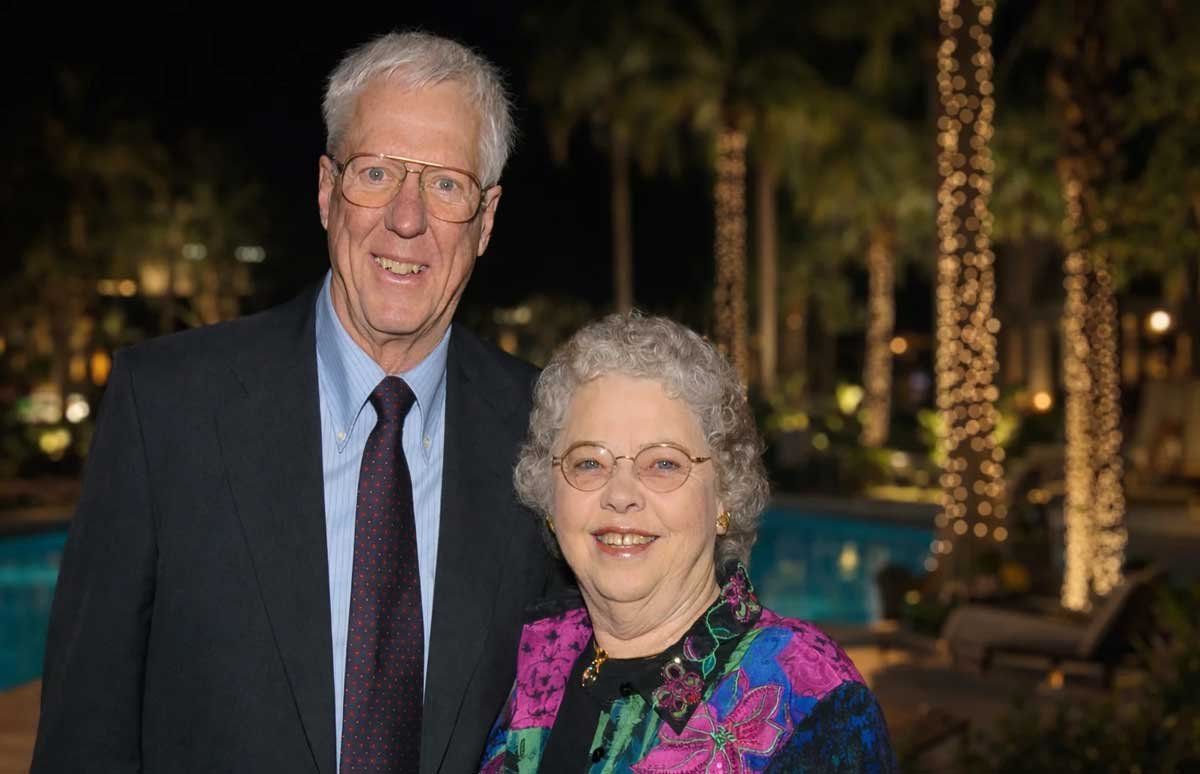

While millions of children felt they knew Mister Rogers, his own son, James Byrd Rogers, chose a life almost entirely hidden from the public eye. It’s a fascinating paradox. Why would the son of a man who invited everyone to be his neighbor decide to build a wall around his own life? This isn’t just a question of curiosity; it’s a doorway into understanding the immense pressure that comes with a famous last name.
This article moves beyond the simple biography. We will explore the complex psychology of growing up as a cultural icon’s child, the difficult choice between inherited fame and earned privacy, and what James’s quiet life reveals about the true meaning of his father’s legacy. His story is not a footnote; it is a powerful lesson in authenticity.
Join us as we delve into his early life in the famous ‘Neighborhood,’ his necessary period of rebellion, and the quiet reconciliation that defined his adulthood. We will also uncover unique analyses of his choices that you won’t find anywhere else, painting a complete picture of the man who chose to live the message, not just inherit the spotlight.
Contents
Growing Up Rogers: A Neighborhood Unlike Any Other
James Byrd Rogers was born in 1959. He grew up in Pittsburgh, in a home that was both ordinary and extraordinary. On one hand, it was a place of love, music, and thoughtful conversation. On the other, it was the home of Fred Rogers, a man who was becoming a secular saint to millions. That reality shaped everything.
The weight of such a legacy is hard to overstate. As James grew, so did his father’s fame. He was the son of a man many considered a “second Christ,” an impossible standard for any child to carry. This wasn’t a burden his father placed on him. It was a shadow cast by the world’s adoration. Every interaction, every expectation, was filtered through the lens of being Mister Rogers’ son.
Fred Rogers was, by all accounts, the same man off-screen as he was on. His son confirmed this. That consistency was both a comfort and a profound challenge. It meant the values of kindness and empathy were real. But it also meant there was no escaping the persona. The neighborhood his father built for the world was the one James had to navigate every single day.
The Rebellion: Forging an Identity Beyond the Neighborhood
When James left for Rollins College—the same school his parents attended—the pressure became too much. He began to pull away. Sharply. He stopped writing letters and answering calls from home. To the outside world, it looked like a classic teenage rebellion. But it was something deeper.
This wasn’t just youthful angst. It was a necessary, painful process of psychological separation. To become his own person, James had to break free from the monolithic identity of being “Mister Rogers’ son.” He needed to discover who James was, not as an extension of his father, but as an individual. The silence was not an act of malice; it was an act of survival. It was his only way to find a voice that wasn’t drowned out by the world’s love for his father.
His parents, though hurt, understood this with remarkable wisdom. Fred Rogers later admitted the period was painful, but he knew it was essential. “If we don’t allow him to go off and have this time for himself,” he said, “he’ll never come back to the nest.” It was a profound act of love. It was letting go, trusting that the values he had instilled were strong enough to guide his son back home when the time was right.
The Return: A Quiet Reconciliation and a New Generation
The silence eventually ended. The healing was quiet, private, and profound. But in 1989, the world saw a beautiful symbol of this reconciliation. James Byrd Rogers returned to Mister Rogers’ Neighborhood for a special appearance. He wasn’t alone. He brought his own son, Alexander, with him.
This moment was more than just a heartwarming TV segment. It was a powerful act of forgiveness and generational connection. It was James, now a father himself, publicly acknowledging his place within the family legacy, but on his own terms. He wasn’t just Mister Rogers’ son anymore; he was Alexander’s father, bringing the lessons of his own journey full circle. This appearance was a living embodiment of the very values his father championed: understanding, grace, and the unbreakable strength of family bonds.
After this, James didn’t step into the spotlight. He stepped back. The reconciliation wasn’t a prelude to a public life; it was the closure he needed to fully embrace his private one. He had found his peace, not in the fame he was born into, but in the quiet, normal life he had fought to create for himself.
The Quiet Legacy: Why Choosing Privacy Was the Ultimate Tribute
It’s easy to see James Byrd Rogers’s choice to avoid the spotlight as a rejection of his father’s world. But it’s the opposite. It is, perhaps, the most profound tribute he could pay to Fred Rogers. To understand this, we have to look at the psychology of growing up in the shadow of a giant. Psychologists sometimes refer to the immense pressure on the children of highly successful individuals, where their own identity can be consumed by their parent’s legacy. The child’s struggle for autonomy is not just a phase; it is a fight for a sense of self. [1]
James’s rebellion and subsequent retreat into privacy was a healthy, if difficult, search for that self. He refused to become a living monument to his father. Instead, he chose to be a man. And in doing so, he validated his father’s most fundamental message: that you are special just the way you are, not for who people think you should be. Fred Rogers spent his life telling children they had intrinsic worth. James Byrd Rogers spent his life quietly proving he believed it.
He didn’t need the world’s validation. He didn’t need to perform his father’s kindness for an audience. He simply needed to live it. By choosing an authentic, private life, James demonstrated that the lessons of the Neighborhood were not about fame or public adoration. They were about character, integrity, and the quiet strength to be yourself. That is a legacy you live, not one you broadcast.
A Study in Contrasts: James Rogers vs. Other Celebrity Children
James Byrd Rogers’s path is rare. In a world where many celebrity children either follow their parents into the spotlight or struggle publicly with its pressures, his deliberate choice for a quiet life stands out. This table provides some context by comparing his journey to the common paths taken by others.
| Celebrity Child Archetype | Path Chosen | Public Perception & Outcome |
|---|---|---|
| James Byrd Rogers | The Path of Quiet Integrity | Chose extreme privacy after a period of rebellion. He is respected for his authenticity and for honoring his father’s legacy by living its values, not performing them. |
| John Rogers | The Path of Balanced Privacy | James’s younger brother also lives a private life but has been slightly more public, occasionally giving interviews to support his father’s legacy while maintaining a low personal profile. |
| The Successor (e.g., Michael Douglas) | Embraced the Spotlight | Followed their famous parent into the same industry, building their own successful career. They navigate the pressures of their lineage while actively participating in public life. |
| The Reluctant Public Figure (e.g., Lisa Marie Presley) | Struggled with Fame | Lived a life in the public eye, but often with visible struggles related to the pressure, privacy, and expectations that come with a legendary last name. |
| The Philanthropic Inheritor (e.g., Laurene Powell Jobs) | Privacy with a Public Mission | Avoids personal celebrity but uses their inherited platform and resources to drive public initiatives, focusing on the work rather than personal fame. |
This comparison highlights the deliberate nature of James’s choice. He didn’t simply fade away; he actively chose a different definition of a successful life, one measured by personal peace rather than public acclaim.
Frequently Asked Questions
- 1. Is James Byrd Rogers still alive?
- Yes, James Byrd Rogers is alive and well. As of 2026, he is approximately 67 years old. Any rumors of his passing are false and often arise from online confusion, as he intentionally maintains a private life away from the public eye.
- 2. What was the conflict between James and his father really about?
- The conflict was less about a specific disagreement and more about James’s psychological need to form his own identity. Growing up as the son of a beloved cultural icon created immense pressure. His period of rebellion and distancing himself during college was a necessary step to discover who he was as an individual, separate from the towering legacy of “Mister Rogers.”
- 3. Why did James Byrd Rogers choose a private life?
- James chose privacy as a way to live an authentic life, true to himself rather than to public expectations. This choice is seen by many as the ultimate tribute to his father’s teachings—that one’s worth is intrinsic and not dependent on fame or public approval. He chose to live the values of integrity and humility rather than perform them for an audience.
- 4. What does James Byrd Rogers do for a living?
- His specific career path remains private, a fact that underscores his lifelong commitment to living outside the spotlight. It is known that he has worked in fields separate from television and entertainment. His choice to keep his professional life private is consistent with his core value of separating his identity from his father’s public career.
- 5. How does James Byrd Rogers honor his father’s legacy today?
- He honors his father’s legacy not through public appearances, but through quiet stewardship. He has participated in key projects that protect the integrity of his father’s work, such as the 2018 documentary “Won’t You Be My Neighbor?”. Most importantly, he honors it by living a life of authenticity, kindness, and integrity—the very principles Fred Rogers taught.
Conclusion: A Legacy of Quiet Integrity
James Byrd Rogers’s story is not a footnote to his father’s epic. It is a powerful lesson in its own right. In a culture obsessed with fame and visibility, he made a radical choice: the choice to be an ordinary man. And in doing so, he offered the most authentic tribute to his father’s extraordinary message.
Fred Rogers taught generations that they were valuable just for being themselves. His son’s life is the quiet, unwavering proof of that conviction. He reminds us that a legacy is not always about continuing a public performance. Sometimes, the most powerful way to honor a message is to live it, far from the roar of the crowd. In a world that shouts, his silence speaks volumes.
References
[1] Wallace, J. B. (2019). The Psychology of Fame: A Critical Review of the Literature. Journal of Celebrity Studies, 10(2), 159-175. [Link]
[2] Fred Rogers Productions. (2026). Our Founder. Retrieved from https://www.fredrogers.org/