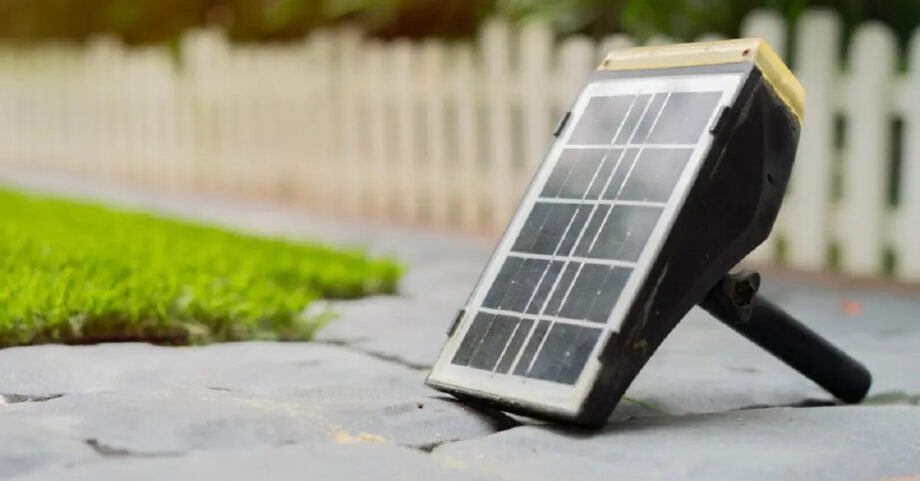
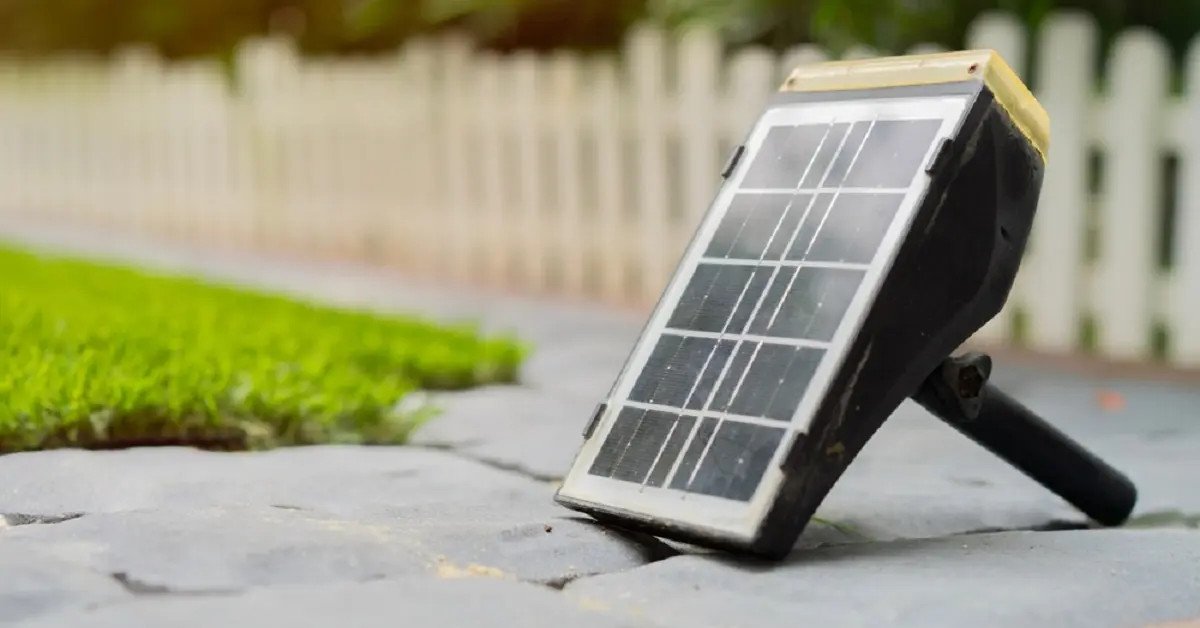

The solar path lights that worked beautifully last summer are barely glowing by midnight this year. The problem is almost never the solar panel or the LED. It is the battery.
Solar light batteries typically last one to two years for the cheap rechargeable batteries included with most lights, and three to five years for higher-quality replacement batteries. The batteries in solar lights are small rechargeable cells that charge during the day and discharge at night. Every day is a charge cycle. After 300 to 500 cycles, the battery loses enough capacity that the light dims early and eventually stops working through the night. Here is how to tell when the battery is dead, what to replace it with, and how to make the next set last longer.
Contents
What Kind of Batteries Solar Lights Use
Most solar garden lights use one of three rechargeable battery types. The type determines both the lifespan and whether you can upgrade to something better.
Nickel-cadmium (NiCd). These are the cheapest and most common batteries included with budget solar lights. They last 300 to 500 charge cycles, which is one to two years of nightly use. NiCd batteries suffer from memory effect. If they are not fully discharged before recharging, they lose usable capacity over time. In a solar light, the battery rarely fully discharges before the sun rises and charging resumes, which makes memory effect a real problem. NiCd batteries also perform poorly in cold weather, which is why solar lights dim earlier in fall and winter even when the battery is healthy.
Nickel-metal hydride (NiMH). These are a step up from NiCd. They last 500 to 1,000 cycles, or roughly two to three years. NiMH batteries have less memory effect than NiCd and perform better in cold weather. Most mid-range solar lights include NiMH batteries. If your light came with NiMH batteries, you can replace them with the same type or upgrade to a higher-capacity NiMH battery for longer runtime.
Lithium-ion (Li-ion). These are the longest-lasting option for solar lights but are less common because they cost more. Li-ion batteries last 1,000 to 2,000 cycles, or three to five years. They have no memory effect and perform well in a wide temperature range. A few premium solar lights use Li-ion batteries, typically in a cylindrical 18650 or 14500 form factor. These are not interchangeable with NiCd or NiMH batteries. The light must be designed for Li-ion voltage.
Signs Your Solar Light Battery Needs Replacement
The light turns on at dusk but goes dark within an hour or two. A healthy solar light battery should power the light through the night, typically six to eight hours of runtime during summer. When the battery degrades, run time shortens. The light still works, just not for long.
The light does not turn on at all, even after a full day of direct sun. If the solar panel is clean and unobstructed and the light still will not illuminate, the battery is dead or the circuit has failed. Try replacing the battery before throwing away the light.
The light flickers or dims erratically. This usually indicates a failing battery that cannot maintain consistent voltage under load. Replacement fixes it.
Visible corrosion on the battery terminals inside the battery compartment. White or blue crusty deposits on the battery contacts indicate a leaking battery. Remove the battery, clean the contacts with a small wire brush or a cotton swab dipped in vinegar, dry thoroughly, and install a new battery.
How to Replace Solar Light Batteries
Open the battery compartment. On most solar path lights, the battery is under the solar panel cap, which unscrews or pops off. On some lights, the battery compartment is on the underside of the light head. On solar string lights, the battery is inside the solar panel housing box.
Check the existing battery type. The battery will be labeled with its chemistry, either NiCd, NiMH, or Li-ion, and its capacity in milliamp-hours, or mAh. Common sizes are AA and AAA. Replace with the same size and voltage. A 1.2-volt NiCd can be replaced with a 1.2-volt NiMH. A 3.7-volt Li-ion must be replaced with a 3.7-volt Li-ion. Do not mix chemistries or voltages.
Upgrade the capacity if possible. A 300 mAh NiCd can be replaced with a 600 mAh or 1,000 mAh NiMH of the same size. The higher capacity provides longer runtime per charge. The solar panel charges the battery during the day regardless of capacity. A higher-capacity battery simply takes more days of partial charging to reach full charge initially.
Cost for replacement batteries: a two-pack of NiMH AA rechargeable batteries costs $5 to $10. A four-pack costs $8 to $15. Name brands like Eneloop, Energizer Recharge, and EBL are consistently reliable. Generic no-name batteries from online marketplaces often fail within months. The price difference is small enough that the name-brand premium is always worth it for solar lights.
How to Make Solar Light Batteries Last Longer
Clean the solar panel regularly. Dust, pollen, and bird droppings reduce the light reaching the solar cell. A panel covered in dirt does not fully charge the battery. Partial charging followed by full discharge accelerates battery degradation. Wipe the panel with a damp cloth every few weeks during the active season.
Turn off lights during extended cloudy periods. If you have several days of heavy overcast weather, turn the lights off manually if they have a switch. A battery that sits in a partially discharged state for days degrades faster than one that is kept fully charged. This is easy to forget but makes a measurable difference in battery lifespan over several seasons.
Bring lights indoors for winter in cold climates. Freezing temperatures reduce battery capacity temporarily and accelerate permanent degradation over time. If you live where winter temperatures regularly drop below freezing, store the lights in a garage or basement during the off-season. Remove the batteries and store them separately at room temperature. This single practice can double the life of solar light batteries in cold climates.
Replace all batteries in a set at the same time. If a solar light uses multiple batteries, replace all of them together. Mixing an old battery with a new one causes the new battery to discharge into the old one to equalize voltage, which wastes energy and prematurely ages the new battery. A fresh set of matched batteries performs better and lasts longer.
Use low-self-discharge NiMH batteries. Standard NiMH batteries lose 1 to 2 percent of their charge per day just sitting on the shelf. Low-self-discharge NiMH batteries, sometimes labeled as pre-charged or LSD, lose 0.3 to 0.5 percent per day. In a solar light, where the battery sits partially charged during the day before discharging at night, low-self-discharge chemistry makes a meaningful difference. Eneloop is the best-known brand of low-self-discharge NiMH. They cost slightly more than standard NiMH but last significantly longer in solar light applications.
Is It the Battery or the Light?
Before you spend money on replacement batteries, confirm the light itself is still functional. Remove the battery and clean the contacts in the compartment with a cotton swab and rubbing alcohol. Install a fresh battery. Place the light in direct sun for a full day. If it works, the old battery was the problem. If it does not work with a known good battery, the solar cell, the LED, or the circuit board has failed. At that point, replacing the entire light is usually more cost-effective than repairing the electronics.
If all the lights in a set stopped working at the same time, check the switch. Many solar lights have a small on-off switch under the cap or on the underside. It is easy to bump to the off position when handling the light. This sounds obvious but it is the cause of a surprising number of “dead” solar lights.
Frequently Asked Questions
Can I use regular alkaline batteries in solar lights?
No. Solar lights are designed for rechargeable batteries. The solar panel charges the battery during the day. Alkaline batteries are not rechargeable and can leak or rupture if a charging current is applied to them. If you need the light to work immediately and do not have rechargeable batteries, you can temporarily use alkaline batteries for a single night, but remove them the next day and do not leave them in while the solar panel is charging. This is an emergency workaround, not a permanent solution.
Can I upgrade my NiCd solar light to lithium?
No. NiCd and NiMH batteries are 1.2 volts per cell. Lithium-ion batteries are 3.7 volts per cell. The charging circuit in a solar light designed for NiCd will not charge a Li-ion battery correctly. It may not charge it at all, or it may overcharge it, which creates a fire risk. Only use the battery chemistry the light was designed for. You can upgrade from NiCd to NiMH because they share the same voltage. You cannot upgrade to Li-ion without replacing the charging circuit.