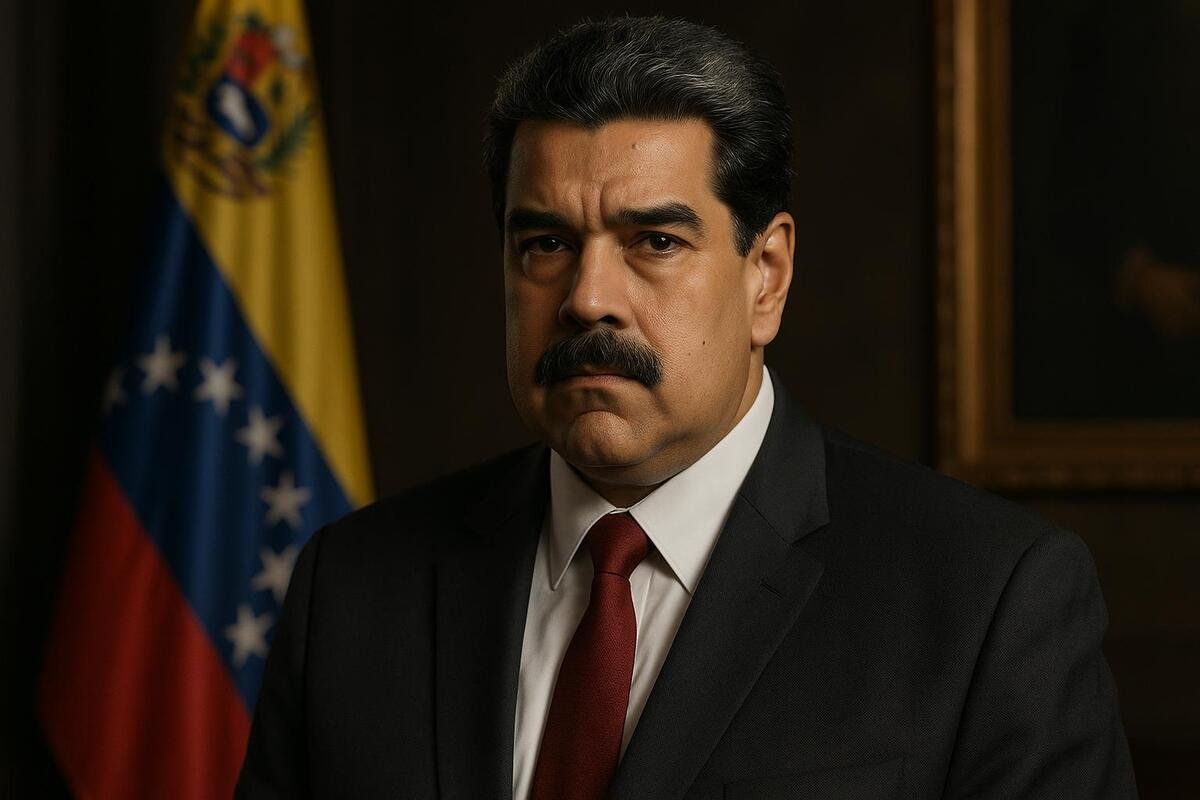

Nicolás Maduro, the president of Venezuela, is a figure of international intrigue and controversy. His leadership has been marked by a severe economic crisis in his home country, yet questions about his personal fortune persist.
The public interest in Nicolás Maduro’s net worth is fueled by the stark contrast between his alleged wealth and the widespread poverty experienced by millions of Venezuelans. While exact figures are debated, his financial standing remains a focal point of criticism.
Most credible sources place his net worth at a figure that, while not astronomical by global standards, represents a significant sum within a nation grappling with hyperinflation and scarcity.
Contents
What Is Nicolás Maduro’s Net Worth in 2025?
Estimates regarding Nicolás Maduro’s net worth generally converge around the $2 million mark. This figure is cited by multiple international media outlets and financial watchdogs.
However, the true extent of the Maduro fortune is difficult to ascertain. The opaque nature of Venezuela’s state finances and allegations of corruption suggest that his actual wealth could be higher, though concrete proof remains elusive.
Compared to some other world leaders, this amount may seem modest. Yet, in the context of Venezuela’s devastated economy, where the average citizen struggles for basic necessities, it paints a picture of significant disparity.
From Bus Driver to Political Power
Maduro’s journey to the presidency began from humble origins. Born in Caracas in 1962 to a working-class family, his early life was far removed from the corridors of power.
He did not complete a traditional high school education, instead entering the workforce as a bus driver for the Caracas Metro system. It was in this role that his political activism began to take shape as a trade union leader.
At the age of 24, Maduro traveled to Cuba for political training, a formative experience that solidified his ideological leanings and prepared him for a future in politics.
The Rise Through Venezuelan Politics
Maduro’s political career gained momentum in the 1990s as a staunch supporter of his predecessor, Hugo Chávez. His loyalty was rewarded with a series of increasingly powerful positions.
In 2000, he was elected to the National Assembly, and by 2006, he was appointed Minister of Foreign Affairs. This role significantly raised his international profile and influence within the Chávez government.
He later served as Vice President before assuming the presidency in 2013 following Chávez’s death. A year later, Time magazine named him one of the 100 Most Influential People in the world, cementing his status on the global stage.
Sources of Wealth and Presidential Income
Officially, Nicolás Maduro’s income is derived from his presidential salary, which is reported to be one of the lowest for a head of state in South America. However, his wealth is believed to have been accumulated over decades in various government roles.
The lifestyle he and his family enjoy stands in stark contrast to the daily struggles of ordinary Venezuelans. This discrepancy is often attributed to the lack of transparency and accountability within his government.
Critics argue that the opaque financial system allows for the personal enrichment of top officials, making it nearly impossible to track the true sources of the Maduro fortune.
Controversies Surrounding Maduro’s Fortune
Maduro’s presidency has been plagued by serious allegations from international bodies. The United States has accused him of narco-terrorism and has offered a $15 million reward for information leading to his arrest, which was later reportedly increased.
He has been linked to criminal organizations, and the U.S. Department of Justice has seized over $700 million in assets allegedly connected to him and his inner circle. These assets include private jets, luxury vehicles, and real estate.
These legal challenges and accusations of widespread corruption have led to Venezuela’s increasing isolation on the international stage, further compounding the nation’s economic woes.
The Stark Reality of Venezuela Under Maduro
Under Maduro’s rule, Venezuela has plunged into a deep economic crisis characterized by hyperinflation, severe shortages of food and medicine, and a collapsing infrastructure.
The wealth gap between the political elite and the general population has widened dramatically. While a small circle enjoys a life of luxury, the majority of citizens face dire circumstances.
Maduro’s family members are also actively involved in politics, holding influential positions within the government. This has led to further accusations of nepotism and has solidified his grip on power, leaving the future of the nation uncertain.