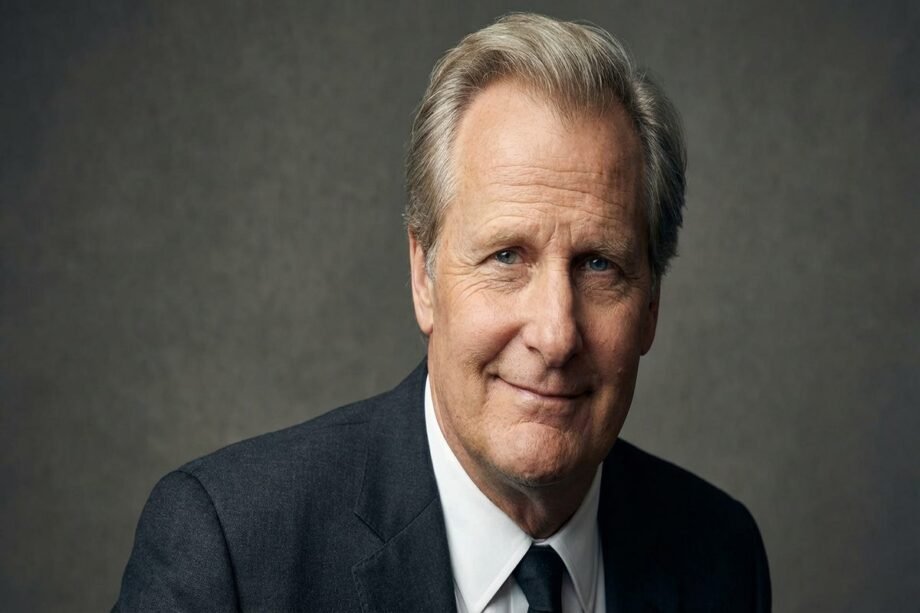
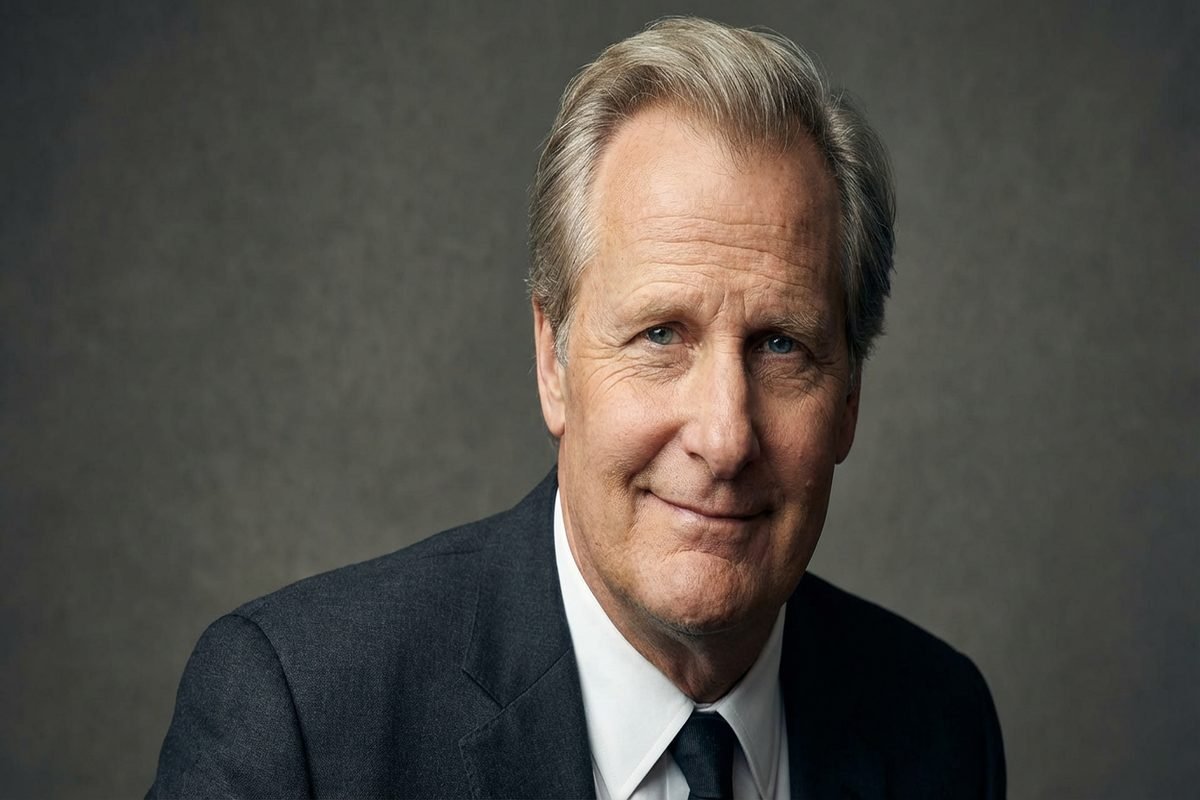

What does it take to build a $45 million fortune in Hollywood without becoming a household name? Jeff Daniels might just have the answer. While many actors chase blockbuster roles and red carpet fame, this Michigan native carved out a different path entirely.
His career reads like a masterclass in versatility. From making audiences laugh in slapstick comedies to earning critical acclaim in serious dramas, Daniels has done it all. As of 2025, his net worth stands at an impressive $45 million, built over nearly five decades of dedicated work.
Contents
What Is Jeff Daniels Net Worth in 2025?
Current estimates place Jeff Daniels net worth between $43 million and $45 million. That might not put him in the same league as Hollywood’s highest earners, but it reflects something more valuable: staying power.
Most actors see their careers peak and fade within a decade or two. Daniels has remained relevant since the early 1980s. His wealth stems from multiple revenue streams including film salaries, television contracts, theater productions, and even music royalties.
What makes his financial success particularly interesting is how he achieved it. He never became the highest-paid actor on any project. Instead, he built wealth through consistency and smart career choices that balanced commercial appeal with artistic merit.
The Film Career That Built His Wealth
Daniels broke into film with a role in “Ragtime” back in 1981. His early work in “Terms of Endearment” showed Hollywood he could handle serious material. But it was “Dumb and Dumber” in 1994 that changed everything.
Here’s where things get interesting. While Jim Carrey walked away with $7 million for playing Lloyd Christmas, Daniels earned just $50,000 for his role as Harry Dunne. The film grossed over $247 million worldwide, making it one of the biggest comedies of the decade.
That pay gap might seem unfair, but the exposure led to bigger opportunities. He landed roles in “Speed,” which brought in $350 million at the box office, and “101 Dalmatians,” which earned over $320 million globally. These commercial hits provided financial stability while he pursued more challenging dramatic roles.
Films like “The Hours” and “The Squid and the Whale” didn’t pay as much, but they kept him in consideration for prestigious projects. Over 80 film credits later, his body of work speaks for itself.
Television Success and Emmy-Winning Performances
Television became a game-changer for Daniels in his later career. When HBO cast him as Will McAvoy in “The Newsroom,” he was already in his late fifties. The role could have gone to a younger actor, but creator Aaron Sorkin wanted someone with gravitas.
The gamble paid off. Daniels won a Primetime Emmy in 2013 for Outstanding Lead Actor in a Drama Series. More importantly, the show reportedly paid him around $150,000 per episode during its three-season run.
He proved that Emmy win wasn’t a fluke when he took home another statue in 2018 for “Godless.” The Netflix western miniseries showcased his range once again, this time as a ruthless outlaw. These high-profile television roles introduced him to younger audiences who might have missed his earlier film work.
Recent projects like “The Comey Rule” and “The Looming Tower” have kept him busy and well-compensated. Television has become a reliable income source, especially as streaming platforms compete for established talent.
Beyond Acting: Theater, Music, and Entrepreneurship
Most actors treat theater as a stepping stone to film and television. Daniels went in the opposite direction. In 1991, he founded the Purple Rose Theatre Company in Chelsea, Michigan. The name came from “The Purple Rose of Cairo,” the Woody Allen film that earned him his first Golden Globe nomination.
Running a theater company in small-town Michigan doesn’t make much business sense on paper. It’s a nonprofit venture that requires constant fundraising and attention. But for Daniels, it represents something money can’t buy: creative control and community connection.
He’s written over a dozen plays for the company and regularly performs there between Hollywood projects. His Broadway work has earned three Tony nominations for performances in “God of Carnage,” “Blackbird,” and “To Kill a Mockingbird.” Theater doesn’t pay like film or television, but it keeps his skills sharp and his artistic soul satisfied.
Then there’s his music career. Daniels has released seven folk albums, performing at small venues and festivals. He also owns 2188 Studio, a video and audio production company in Michigan. These ventures might not contribute millions to his net worth, but they diversify his portfolio and give him multiple creative outlets.
Awards and Recognition Throughout His Career
Two Primetime Emmy Awards sit on Daniels’ shelf, along with evidence of five Golden Globe nominations and three Tony nominations. These accolades matter beyond ego. They signal to producers and directors that he’s worth the investment.
Award recognition tends to increase an actor’s quote, the baseline salary they can command for future projects. After winning his first Emmy for “The Newsroom,” Daniels likely saw his television asking price rise significantly. The same principle applies to his theater work, where Tony nominations validate his stage credentials.
Industry recognition also extends career longevity. Actors who win major awards continue getting quality offers well into their sixties and seventies. At 70 years old, Daniels still books leading roles because his trophy case proves he can deliver.
The Michigan Connection: Staying True to His Roots
In 1986, when most actors were fighting to stay in Los Angeles, Daniels moved his family back to Chelsea, Michigan. The town has fewer than 5,000 residents. He wanted his kids to grow up away from Hollywood’s influence.
That decision defines his entire approach to wealth and success. He could have leveraged his fame into bigger paychecks by staying in LA and networking at industry events. Instead, he chose quality of life over maximum earnings.
The Purple Rose Theatre Company serves as his way of giving back. It provides opportunities for Midwestern actors and playwrights who might never get a shot in New York or Los Angeles. He’s used his Hollywood connections to bring attention and resources to Michigan’s arts community.
This grounded approach makes him relatable in a way many wealthy actors aren’t. He shops at local stores, attends community events, and lives in a regular neighborhood. His wealth hasn’t changed his fundamental character, which might explain why he’s remained employable for so long. Directors and producers appreciate working with someone who hasn’t let success go to their head.
Jeff Daniels net worth of $45 million tells only part of his story. The real achievement is how he earned it: through decades of consistent work, smart choices that balanced art and commerce, and a refusal to compromise his values for a bigger paycheck. He’s built a career that most actors would envy, not because of the money, but because of the respect and creative freedom that came with it.