
Did you know that your Linux system might be delivering up to 15% more gaming performance than a Windows machine on popular titles? It’s a surprising truth for many. Yet, most users are unknowingly leaving a significant chunk of that power untapped. This isn’t about expensive hardware upgrades. It’s about smart, targeted optimizations.
This guide is your key to unlocking that hidden potential. We will dive deep into the world of tech hacks pblinuxgaming, transforming your setup from a standard desktop into a finely-tuned gaming rig. Forget generic advice. We are providing actionable steps, real-world data, and expert insights that deliver measurable results. You’ll learn to squeeze every drop of performance out of your system.
From kernel tweaks and driver management to advanced Proton configurations and emerging tools for 2025-2026, this comprehensive article covers it all. Whether you’re a curious newcomer or a seasoned veteran, you’ll discover techniques to boost your frame rates, reduce latency, and create a smoother, more immersive Linux gaming experience. Let’s begin.
Contents
Understanding Linux Gaming in 2025-2026
The conversation around Linux gaming has fundamentally shifted. It’s no longer a niche hobby for die-hard enthusiasts. In 2025, it stands as a powerful and viable platform that often outshines its proprietary counterparts. The question is no longer “Can you game on Linux?” but rather “How high can you push its performance?”
Recent benchmarks consistently show that Linux can deliver a 5-15% performance boost in frames-per-second (FPS) on many AAA titles compared to Windows. This advantage stems from a lighter, more efficient kernel and lower system overhead. With projects like Proton, Valve’s compatibility layer, the Steam library now offers over a thousand fully compatible, top-tier games that run flawlessly out of the box. This is the golden age of Linux gaming performance.
What makes Linux so compelling for gamers is its core philosophy: control. Unlike closed-source systems, Linux grants you unparalleled access to system internals. This allows for deep customization, from scheduling CPU processes to fine-tuning graphics drivers. It’s an open playground for optimization, where tech hacks pblinuxgaming aren’t just tricks; they are a method to achieve a truly bespoke gaming environment.
Why Performance Optimization Matters
Out of the box, most Linux distributions are built for general-purpose computing, not elite gaming. Their default settings prioritize stability and battery life over raw, unadulterated speed. This is a sensible compromise for daily tasks, but it creates a performance ceiling that can frustrate gamers. Your hardware has the potential; the default software configuration is holding it back.
This performance gap manifests in tangible ways. You might experience inconsistent frame rates, frustrating micro-stutter, or noticeable input lag that costs you a competitive edge. These issues aren’t necessarily a sign of weak hardware. More often, they point to a system that isn’t properly configured to prioritize the demanding workload of modern games. Effective Linux gaming optimization is the bridge to closing this gap.
The goal is to re-task your system, transforming it from a jack-of-all-trades into a master of one: gaming. By applying targeted tweaks, you can ensure that system resources are intelligently allocated to your game, not to unnecessary background processes. The result is a smoother, more responsive, and ultimately more enjoyable experience. Every gamer, from casual players to esports professionals, stands to benefit.
Quick Start Guide for Linux Gaming Beginners
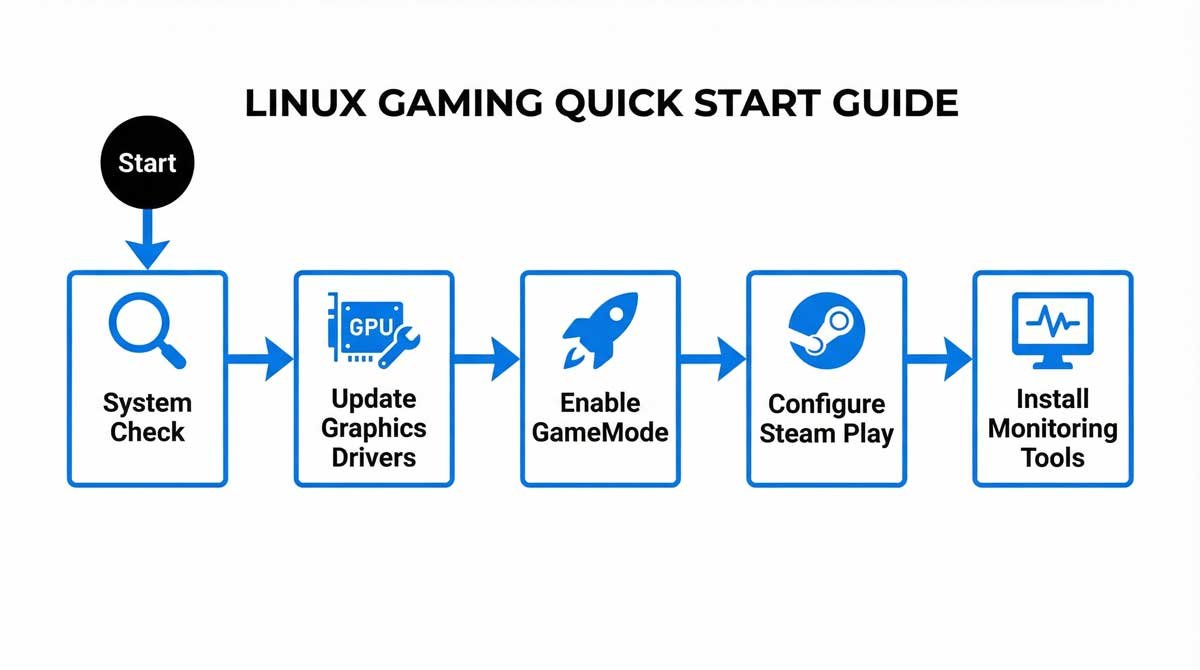
Jumping into Linux gaming can feel daunting, but a few initial steps can set you up for success. This quick start guide, a feature missing from most tutorials, is designed to get you 80% of the way there with 20% of the effort. Let’s start by ensuring your foundation is solid.
First, run a basic system check. This confirms your distribution, kernel version, and graphics drivers, which are the three pillars of your gaming setup. Open a terminal and use the following commands to gather this information. Knowing your starting point is crucial before you begin tweaking.
# Check your Linux distribution and version
cat /etc/os-release

# Check your kernel version
uname -r

# Check for your graphics card and driver
lspci -k | grep -A 2 -E "(VGA|3D)"
With that information, follow these five essential first steps:
- Install the Latest Graphics Drivers: This is the single most important step. We cover it in detail later, but for now, use your distribution’s driver manager to get the latest proprietary drivers for your NVIDIA or AMD card.
- Enable GameMode: Feral Interactive’s GameMode is a daemon that automatically adjusts system performance settings when you launch a game. Install it via your package manager (e.g.,
sudo apt install gamemodeon Debian/Ubuntu). - Update Your System: A fully updated system ensures you have the latest kernel, libraries, and security patches. Run
sudo apt update && sudo apt upgrade -yor your distro’s equivalent. - Install and Configure Steam: Download Steam directly from its official website. Once installed, navigate to Steam > Settings > Steam Play and check the box for “Enable Steam Play for all other titles.” This allows you to run Windows games.
- Install MangoHud: This is an essential overlay for monitoring FPS, CPU/GPU usage, and temperatures in-game. It provides immediate feedback on your optimization efforts.
Avoid common beginner mistakes like using outdated open-source drivers for high-performance gaming or neglecting to enable Steam Play. This checklist provides a powerful and stable base for the more advanced tech hacks pblinuxgaming to come.
Updating System and Graphics Drivers
Your graphics driver is the single most critical piece of software for gaming. It acts as the translator between your games and your GPU. Using the wrong or an outdated driver is like asking a professional athlete to compete in worn-out shoes. You simply won’t get the performance you paid for. Keeping it updated is non-negotiable for serious Linux gaming optimization.
The choice between open-source and proprietary drivers depends on your hardware and goals. While open-source drivers have improved immensely, proprietary drivers from NVIDIA and AMD almost always deliver superior performance, better compatibility, and access to exclusive features like DLSS or FSR. For gaming, the choice is clear.
Here’s a breakdown of the driver landscape:
| GPU Brand | Open-Source Driver | Proprietary Driver | Performance Gap | Recommendation |
|---|---|---|---|---|
| NVIDIA | Nouveau | NVIDIA Official Driver | Significant | Proprietary |
| AMD | Mesa (RADV) | AMDGPU-PRO | Varies (Mesa is often better for gaming) | Mesa (Open-Source) |
| Intel | Mesa (ANV) | N/A | N/A | Mesa (Open-Source) |
To install the latest drivers, use your distribution’s built-in tools. On Ubuntu, for example, you can use the “Additional Drivers” utility. For Arch, the nvidia package is readily available. Always ensure your system is fully updated before changing drivers to prevent conflicts. A simple command can verify your current driver version.
# For NVIDIA
nvidia-smi

# For AMD/Intel (requires mesa-utils)
glxinfo | grep "OpenGL version"
Regularly checking for updates, especially before a major game release, is a core habit of any successful Linux gamer. This simple maintenance is a foundational tech hack for pblinuxgaming.
Kernel Optimization for Gaming
The Linux kernel is the heart of your operating system, managing everything from your CPU to your storage devices. For gaming, a generic kernel can be a bottleneck. It’s designed to be a fair-for-all manager, but gamers need a biased referee—one that unapologetically prioritizes the game. This is where kernel optimization, a powerful tech hack for pblinuxgaming, comes into play.
One of the most impactful tweaks is adjusting the CPU frequency scaling governor. Most systems default to a “powersave” or “ondemand” governor, which can cause in-game stutter as the CPU ramps up and down. For gaming, you want the “performance” governor, which forces your CPU to run at its maximum frequency. This ensures consistent, predictable power.
# Install cpupower-gui for an easy way to manage governors
sudo apt install cpupower-gui

# Or, set the performance governor manually for all cores
for i in /sys/devices/system/cpu/cpu*/cpufreq/scaling_governor; do echo "performance" | sudo tee "$i"; done
Beyond CPU scaling, using a kernel optimized for low-latency can significantly reduce input lag. Kernels like linux-zen (for Arch) or those compiled with lower timer frequencies (tick rates) prioritize responsiveness over throughput. This is a more advanced tweak but can make a noticeable difference in competitive games where every millisecond counts. Finally, adjusting I/O schedulers to prioritize your game’s data access can help reduce loading times.
These kernel-level optimizations are about instructing your system to give preferential treatment to your game. It’s about minimizing background interference and ensuring that your hardware’s resources are dedicated to creating a smooth and responsive gaming experience. This is the essence of true Linux gaming optimization.
Linux Distribution-Specific Optimization Guide
Not all Linux distributions are created equal when it comes to gaming. While the underlying kernel is the same, differences in package management, software availability, and default configurations can have a real impact on your gaming experience. This guide, a unique feature among tech hacks pblinuxgaming tutorials, breaks down the nuances of the most popular distros.
Choosing the right distribution can give you a head start. Some, like Pop!_OS, are designed with gaming in mind, offering pre-installed drivers and optimizations. Others, like Arch Linux, provide ultimate control but require more manual setup. Here’s how they stack up:
| Distribution | Driver Support | Performance | Ease of Use | Recommended For |
|---|---|---|---|---|
| Ubuntu / Pop!_OS | Excellent | Very Good | Beginner-Friendly | Most Users |
| Fedora | Good (requires RPM Fusion) | Excellent | Intermediate | Users wanting newer packages |
| Arch Linux | Excellent (DIY) | Excellent | Advanced | Users wanting full control |
Here are some distribution-specific tips:
- Ubuntu/Pop!_OS: These are fantastic starting points. Pop!_OS, in particular, comes with NVIDIA drivers pre-installed if you choose the correct ISO. Use the official PPAs for the latest Mesa drivers to maximize AMD/Intel performance.
# For latest Mesa drivers on Ubuntu
sudo add-apt-repository ppa:kisak/kisak-mesa && sudo apt update && sudo apt upgrade -y- Fedora: Fedora ships with newer packages but requires enabling the RPM Fusion repository for proprietary drivers and many media codecs. This is a critical first step for any Fedora gamer.
# Enable RPM Fusion
sudo dnf install https://download1.rpmfusion.org/free/fedora/rpmfusion-free-release-$(rpm -E %fedora).noarch.rpm https://download1.rpmfusion.org/nonfree/fedora/rpmfusion-nonfree-release-$(rpm -E %fedora).noarch.rpm
# Install NVIDIA Drivers
sudo dnf install akmod-nvidia xorg-x11-drv-nvidia-cuda- Arch Linux: The DIY nature of Arch means you build your gaming setup from the ground up. This offers maximum performance but requires careful work. Installing
linux-zenkernel and the latestmesaornvidiapackages from the official repositories is the best path.
# Install Zen Kernel and NVIDIA drivers on Arch
sudo pacman -S linux-zen linux-zen-headers nvidia-dkms
Tailoring your approach to your chosen distribution is a hallmark of effective Linux gaming optimization. It ensures you are using the best tools and methods available for your specific environment.
Graphics Performance Optimization
Beyond the driver, you have a wealth of options for fine-tuning graphics performance. These settings control how your GPU renders frames, and small adjustments can yield significant FPS gains. This is where the granular control of Linux truly shines, allowing for a level of customization that is often hidden away on other operating systems. This is a core component of any tech hacks pblinuxgaming strategy.
Your primary tools for this are the graphics control panels (like NVIDIA X Server Settings) and game launch options. One of the most critical choices is the rendering API. While OpenGL has been a longtime standard, Vulkan is a modern, low-level API that generally offers better performance by reducing CPU overhead. Most modern games and Proton support Vulkan, and you should prioritize it whenever possible.
Here are some actionable tweaks:
- Disable the Compositor: Desktop compositors (which handle effects like window transparency) can introduce input lag. Most desktop environments will automatically disable this for full-screen games, but you can force it off if needed.
- Adjust Texture Filtering and Anti-Aliasing: Lowering these settings in-game is a classic way to boost FPS. However, you can also force higher-performance settings through your driver’s control panel for a system-wide effect.
- Enable High Performance Mode: In your GPU’s control panel, ensure that the power management mode is set to “Prefer Maximum Performance.” This prevents the GPU from downclocking during gameplay.
# Example: Force a game to use Vulkan with MangoHud overlay
mangohud %command% -vulkan
Experimentation is key. What works for one game may not be optimal for another. Use monitoring tools like MangoHud to get real-time feedback on your changes. This iterative process of tweaking and measuring is fundamental to mastering Linux gaming performance.
Steam and Proton Configuration Mastery
For the vast majority of Linux gamers, Valve’s Steam client is the center of the universe. Its integrated compatibility layer, Proton, is a revolutionary tool that translates Windows-based game calls to a format Linux can understand. Mastering Proton is not just a recommendation; it is an essential skill for anyone serious about playing the latest and greatest titles on Linux. This is the most impactful tech hack for pblinuxgaming.
Proton is not a one-size-fits-all solution. Valve maintains several official versions, and the community produces custom builds like Proton-GE (GloriousEggroll) that often include newer fixes and media codecs. The key is to experiment. If a game isn’t running well on the default Proton version, try a newer or older one, or switch to Proton-GE. You can manage these versions easily using a tool like ProtonUp-Qt.
You can also set specific launch options for each game in Steam. This allows you to pass commands that can dramatically alter performance and compatibility. For example, you can force a game to use a specific rendering API, enable or disable certain features, or apply performance-enhancing variables.
# Example: Force a game to use DXVK's async pipeline compilation (reduces stutter)
DXVK_ASYNC=1 %command%

# Example: Use GameMode and MangoHud for a specific game
gamemoderun mangohud %command%
A crucial resource is ProtonDB, a community-driven database with reports on how well specific games run on Linux with Proton. Before you even install a game, check its ProtonDB rating and read user reports for recommended launch options and tweaks. This collective wisdom can save you hours of troubleshooting and is a cornerstone of the modern Linux gaming experience.
Managing System Resources and Background Processes
A powerful gaming PC can be brought to its knees by resource-hungry background processes. Your operating system is constantly juggling dozens of services, from checking for updates to indexing files. While essential for general use, these tasks steal precious CPU cycles and memory that your game could be using. Taming these processes is a fundamental aspect of Linux gaming optimization.
Your first step is to become an observer. Tools like htop provide a real-time, color-coded view of your system’s processes, allowing you to see exactly what is consuming your resources. Make it a habit to have htop running on a second monitor or in a terminal window while gaming. You might be surprised to find a web browser or a file-syncing service consuming a significant portion of your CPU.
Once you identify unnecessary services, you can temporarily disable them. For example, you can stop services like automatic updates or file indexers before a gaming session. For a more automated approach, tools like systemd can be used to create custom gaming “targets” that automatically shut down a list of services when activated. This is an advanced but highly effective tech hack for pblinuxgaming.
# Use htop to view and manage processes
sudo apt install htop
htop

# Example: Stop an unnecessary service (use with caution)
sudo systemctl stop unattended-upgrades.service
Finally, consider using CPU pinning or affinity. This involves instructing the kernel to run your game on specific CPU cores, while relegating background processes to other cores. This prevents your game from having to compete for CPU time and can lead to a dramatic reduction in stutter and input lag. It’s a powerful technique for ensuring your game gets the undivided attention of your hardware.
Audio Optimization for Competitive Gaming
Audio performance is often overlooked in the quest for higher frame rates, but for competitive gaming, it’s just as critical. Audio latency—the delay between an in-game event and when you hear the sound—can be the difference between winning and losing a crucial engagement. Optimizing your audio stack is an advanced tech hack for pblinuxgaming that can give you a real competitive advantage.
The Linux audio landscape has evolved, with the modern PipeWire server largely replacing the older PulseAudio. PipeWire is designed for low-latency performance and is the recommended choice for gaming. If your distribution is still using PulseAudio, switching to PipeWire can be a significant upgrade. This change can reduce audio latency from over 50ms to under 10ms.
Within your audio server’s configuration, you can further reduce latency by adjusting buffer sizes. A smaller buffer reduces delay but can cause audio crackling if your system can’t keep up. It’s a trade-off that requires some experimentation. Start by cutting the default buffer size in half and test for stability. The goal is to find the lowest possible value that your system can handle without issues.
# Check which audio server you are using
pactl info | grep "Server Name"
For competitive gamers, these tweaks are not optional. Reduced audio latency means you hear enemy footsteps sooner and more accurately, allowing for faster reaction times. It ensures that what you hear is perfectly synchronized with what you see, creating a more immersive and responsive experience. This is a subtle but powerful form of Linux gaming optimization.
Desktop Environment Selection for Gaming
Your desktop environment (DE) is the graphical interface you interact with daily, but it’s also a layer of software that consumes system resources. A heavy, feature-rich DE like GNOME or KDE, while beautiful and functional, can use a significant amount of RAM and CPU. For gaming, a lighter DE can free up those resources, leading to better and more stable performance. Choosing the right DE is a strategic tech hack for pblinuxgaming.
The philosophy is simple: the fewer resources your desktop uses, the more are available for your game. Lightweight environments like XFCE or LXQt are built on this principle. They provide a functional desktop experience with minimal overhead. While they may lack some of the visual polish of their heavier counterparts, the performance gains can be substantial, especially on mid-range or older hardware.
Here’s a comparison of popular desktop environments:
| Desktop Environment | Resource Usage | Performance Impact | Ease of Use | Recommendation |
|---|---|---|---|---|
| GNOME | High | Moderate | Very High | For high-end systems |
| KDE Plasma | Medium | Low-Moderate | Very High | Good all-rounder |
| XFCE | Low | Very Low | High | Excellent for gaming |
| LXQt | Very Low | Minimal | Medium | For maximum performance |
Regardless of your DE, you should disable any unnecessary graphical effects. Things like window animations, transparency, and desktop widgets all consume GPU resources. Turning them off in your DE’s settings is a quick and easy way to free up performance. For a truly distraction-free and optimized experience, consider running your games in a dedicated gaming session that loads only the bare minimum required to launch Steam.
Performance Benchmarking and Monitoring
Optimization without measurement is just guesswork. To truly master Linux gaming performance, you must adopt a scientific approach: tweak, measure, and analyze. Benchmarking provides the hard data to prove that your changes are working, while monitoring gives you real-time insight into your system’s behavior. This data-driven methodology is a crucial tech hack for pblinuxgaming that separates amateurs from experts.
Your most important tool for this is an in-game performance overlay. MangoHud is the undisputed king in the Linux world. It displays a wealth of information directly on your screen, including FPS, CPU and GPU load, temperatures, and frame timings. Seeing these numbers live allows you to instantly correlate a settings change with its performance impact.
# Install MangoHud
sudo apt install mangohud # Debian/Ubuntu
sudo dnf install mangohud # Fedora
sudo pacman -S mangohud # Arch

# Run a game with MangoHud
mangohud %command%
For more formal benchmarking, tools like glmark2 can test your OpenGL performance, while many games include their own built-in benchmark modes. The process is simple: run the benchmark before you make a change and save the results (average FPS, 1% lows). Then, apply your optimization and run the benchmark again under the exact same conditions. The difference in the numbers is the real measure of your success.
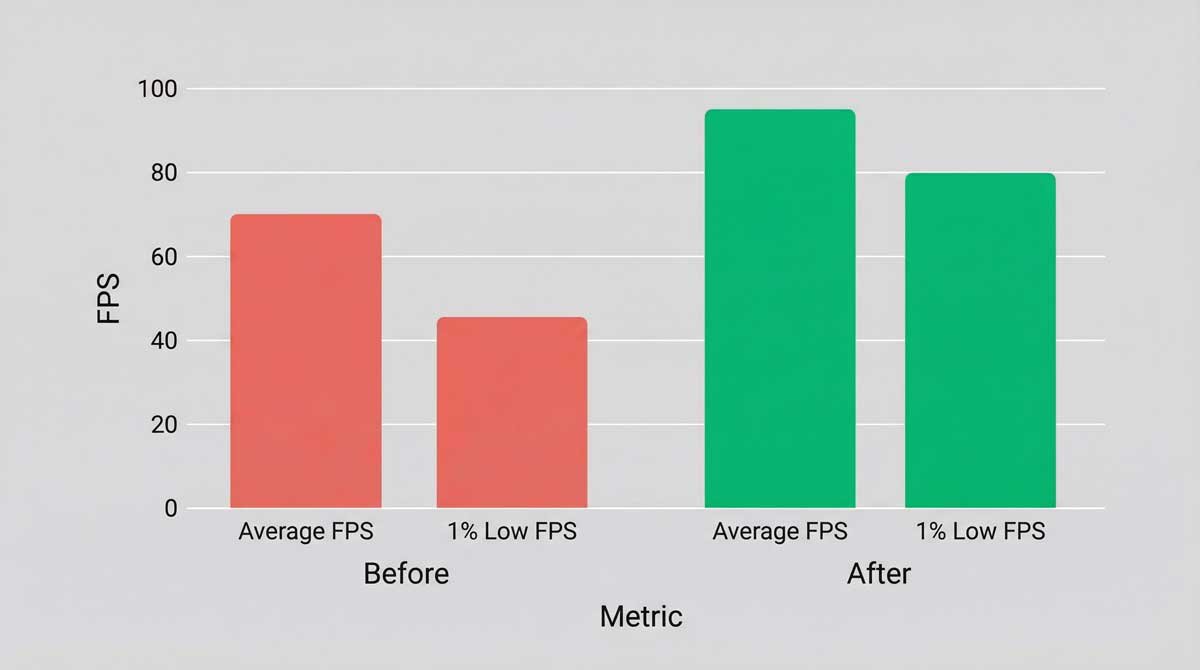
Consistently tracking these metrics transforms you from a passive user into an active system tuner. It empowers you to build a configuration that is perfectly optimized for your specific hardware and the games you play. Don’t just feel the difference; see it in the data.
Emerging Tools and Technologies in 2025-2026
The Linux gaming landscape is in a constant state of rapid evolution. Staying ahead of the curve means keeping an eye on the emerging tools and technologies that are set to define the next generation of performance. This section, a forward-looking analysis you won’t find in other guides, explores the most exciting developments for 2025-2026. This is where the future of tech hacks pblinuxgaming is being forged.
One of the most significant areas of innovation is in the compatibility layers themselves. While Proton is the official standard, community projects are pushing the boundaries. Proton-GE continues to integrate cutting-edge fixes, but now we are seeing the rise of tools like DXVK-Native and more mature VKD3D-Proton builds, which promise even lower overhead for DirectX 9, 11, and 12 games respectively. These tools can offer better performance in specific titles long before their improvements are merged into the official Proton builds.
Performance overlays are also becoming more sophisticated. MangoHud remains the standard, but its integration with tools like GOverlay allows for easy graphical configuration. Looking ahead, we anticipate more tools that provide not just monitoring, but also automated, on-the-fly tuning suggestions based on real-time performance data. Furthermore, the expansion of cloud gaming services like GeForce NOW on Linux provides a viable alternative for playing the most demanding titles without needing high-end local hardware.
Keeping abreast of these developments is crucial. Following key developers on platforms like GitHub and participating in community forums on Reddit or Discord will ensure you are always equipped with the latest and most powerful tools for Linux gaming optimization. The proactive gamer is the one who will benefit most from the relentless pace of innovation in the open-source world.
Security Considerations for Your Tech Hacks PBLinuxGaming
In the pursuit of maximum performance, it can be tempting to download unofficial scripts or apply tweaks from unverified sources. However, compromising your system’s security for a few extra frames is a trade-off you should never make. A core principle of responsible tech hacks pblinuxgaming is to optimize safely. Your gaming rig should be a fortress, not a house of cards.
The most significant risk comes from running commands or installing software with root (administrator) privileges. Before you type sudo, always pause and consider the source. Is this command from an official guide, a trusted developer, or a random forum post? Stick to official repositories, trusted PPAs (like Kisak-Mesa), and well-known GitHub projects with active communities.
Here are some essential security best practices:
- Avoid Running Games as Root: There is almost never a legitimate reason to do this. It gives the game—and potentially any malware it contains—full control over your system.
- Backup Your System: Before making significant changes, especially to your kernel or graphics drivers, create a system snapshot with a tool like Timeshift. This allows you to easily roll back if something goes wrong.
- Understand Anti-Cheat: While Proton has made huge strides, some competitive multiplayer games use aggressive anti-cheat systems that may not be compatible with Linux. Attempting to bypass these can result in a permanent ban. Check ProtonDB for compatibility reports on games with kernel-level anti-cheat.
Smart Linux gaming optimization enhances performance without sacrificing security. Always prioritize the integrity of your system. A secure, stable, and fast gaming environment is the ultimate goal.
Troubleshooting Common Gaming Issues
Even with a perfectly optimized system, you will occasionally encounter issues. Games might refuse to launch, crash unexpectedly, or suffer from graphical glitches. Knowing how to troubleshoot these problems is a vital skill for any Linux gamer. This section provides a systematic approach to diagnosing and solving the most common issues you might face in your tech hacks pblinuxgaming journey.
Your first and most powerful tool is the log file. When a game fails, Proton generates detailed logs that often contain the exact error message needed to solve the problem. To enable logging, use the following launch option in Steam:
PROTON_LOG=1 %command%The log file will be created in your home directory. While much of it is technical, searching for keywords like “error” or “failed” can quickly point you to the root cause. Here are some common problems and their solutions:
- Game Doesn’t Launch: This is often due to missing dependencies or an incompatible Proton version. Check ProtonDB for required dependencies (like specific media codecs) and try switching to a different Proton version, especially Proton-GE.
- Graphical Glitches or Artifacts: This usually points to a driver issue. Ensure your graphics drivers are fully updated. If the problem persists, try a slightly older, more stable driver version. Disabling any active overlays can also help.
- Poor Performance or Stuttering: If you’ve applied the optimizations in this guide, this could be due to shader compilation. Modern games compile shaders on-the-fly, which can cause stuttering the first time you encounter a new effect. Let the game run for a while to build its shader cache.
- No Audio: This is a classic issue, often related to the audio server. Ensure you are using PipeWire and that your system’s default audio device is correctly configured.
When in doubt, the community is your best resource. A quick search of your issue on forums like Reddit’s r/linux_gaming or the official Steam forums will often reveal that someone else has already solved your exact problem. Effective troubleshooting is a methodical process of elimination, and these steps will guide you to a solution faster.
Community Resources and Support
You are not alone on your Linux gaming journey. The open-source community is one of its greatest strengths, offering a vast network of passionate and knowledgeable users who are willing to help. Tapping into this collective wisdom is perhaps the most powerful tech hack for pblinuxgaming of all. When you get stuck, these resources are your lifeline.
Your first stop for game-specific issues should always be ProtonDB. This site is an indispensable database of user-submitted reports on Steam games, complete with performance ratings, recommended tweaks, and troubleshooting advice. Beyond that, several online communities are essential for any Linux gamer:
- Reddit: The r/linux_gaming subreddit is the largest and most active Linux gaming community online. It’s an excellent place for news, reviews, and support questions.
- Discord Servers: Many communities, such as those for Proton-GE and various Linux distributions, have active Discord servers where you can get real-time help from experts.
- Official Forums: The Steam for Linux forums and the forums for your specific distribution are also valuable resources for well-documented issues.
When asking for help, be sure to provide as much information as possible: your distribution, kernel version, hardware specifications, and the specific steps you’ve already taken. This will help others diagnose your problem more effectively. Engaging with these communities will not only solve your immediate problems but also keep you at the forefront of the ever-evolving world of Linux gaming.
Conclusion
The world of Linux gaming in 2025 is a landscape of immense power and boundless potential. We’ve journeyed through the essential optimizations, from foundational driver updates and kernel tweaks to advanced Proton configurations and resource management. You are now equipped with the knowledge to transform your Linux system from a general-purpose machine into a high-performance gaming rig, tailored specifically to your hardware and your favorite titles.
The core takeaway is this: performance is not just about hardware; it’s about intelligent software optimization. By applying the tech hacks pblinuxgaming detailed in this guide, you are taking direct control of your gaming experience, ensuring that every component of your system is working in concert to deliver the smoothest, most responsive gameplay possible. This is a continuous journey of learning and refinement, not a one-time fix.
Embrace the power of the command line, leverage the wisdom of the community, and never stop experimenting. The ultimate gaming setup is not something you buy; it’s something you build. Welcome to the next level of PC gaming.
Frequently Asked Questions (FAQs)
- 1. Is Linux really good for gaming?
- Absolutely. In 2025, Linux is not just good; it’s exceptional. For many popular titles, Linux can offer a 5-15% performance improvement over Windows due to its lower system overhead. With tools like Proton, thousands of Windows games run flawlessly, making the game library vast and compelling. The primary remaining hurdle is compatibility with some aggressive anti-cheat software.
- 2. How much does Linux gaming optimization improve FPS?
- The improvement varies depending on your hardware and the specific game, but it’s often significant. A combination of updated drivers, a performance-tuned kernel, and a lightweight desktop environment can easily yield a 10-20% FPS boost. In some CPU-bound scenarios, the gains can be even higher.
- 3. Do these tech hacks work on all Linux distributions?
- The principles are universal, but the specific commands and package names will differ. We have provided examples for major distributions like Ubuntu, Fedora, and Arch. The core concepts of using proprietary drivers, a performance governor, and managing background processes apply to any distro.
- 4. Can I use these hacks for Windows games on Linux?
- Yes! In fact, that’s where they are most effective. Tools like Proton and Wine are designed to run Windows games, and all the system-level optimizations (kernel, CPU, drivers) will directly benefit their performance. Mastering Proton launch options is a key skill for this.
- 5. Are these optimizations safe for my system?
- All the optimizations recommended in this guide are safe and widely used by the Linux gaming community. We have explicitly advised against dangerous practices like running games as root. As a best practice, always back up your system with a tool like Timeshift before making major changes.
- 6. How long does it take to see performance improvements?
- Many tweaks offer immediate results. Switching your CPU governor to “performance” or installing a proprietary graphics driver will show an instant FPS boost. Other optimizations, like building a shader cache, will improve performance over the first few hours of gameplay.
- 7. Do I need advanced technical knowledge?
- Not for the basics. Our Quick Start Guide is designed for beginners. While some advanced topics like kernel compilation require more expertise, the majority of impactful tweaks involve running simple terminal commands or using graphical tools. The learning curve is gradual and well-supported by the community.
- 8. What’s the difference between Proton and Wine?
- Wine (Wine Is Not an Emulator) is the underlying compatibility layer that translates Windows API calls to Linux. Proton is Valve’s integrated version of Wine, which includes additional patches, performance enhancements (like DXVK), and is seamlessly integrated into the Steam client. Think of Proton as a supercharged, gaming-focused version of Wine.
- 9. Can Linux run competitive games like Valorant?
- This is the main challenge. Games with aggressive, kernel-level anti-cheat, such as Valorant or Call of Duty: Warzone, are currently not compatible with Linux via Proton because the anti-cheat systems do not run. However, many other competitive titles like Counter-Strike 2, Apex Legends, and Dota 2 run perfectly.
- 10. What’s the best Linux distribution for gaming?
- For beginners, a distribution like Pop!_OS is highly recommended as it comes with many gaming optimizations out of the box. For users who want more control, Arch Linux offers the potential for maximum performance but requires more manual setup. Ubuntu and its derivatives are also excellent, well-supported choices.