
Contents
Who Was Moose Heyliger?
Frederick Theodore Heyliger, known to his comrades as “Moose,” was a figure of quiet strength and immense courage. His story is one of leadership, sacrifice, and the often-unseen personal battles fought by the heroes of World War II.
Born in Massachusetts, Heyliger’s early life was rooted in the American landscape. He worked as a farm hand, developing a physical presence that would later earn him his memorable nickname.
A Glimpse into His Early Life
Before the war, Moose Heyliger was a young man with a love for the outdoors. He graduated from Lawrence Academy at Groton in 1937 and went on to complete three years of college.
This period of his life shaped a man who was both physically imposing and deeply connected to nature, a trait that would resurface in his later years.
A Soldier’s Journey in Easy Company
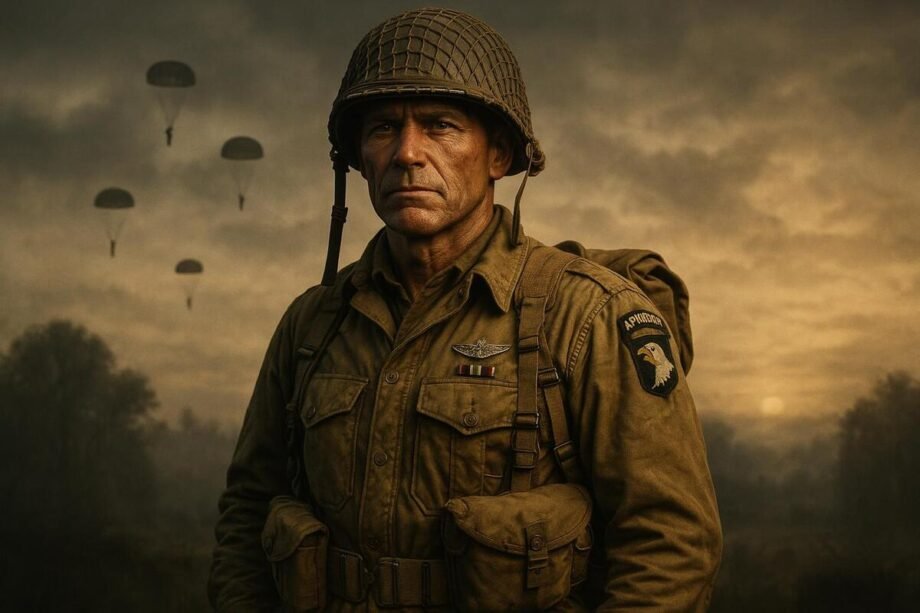
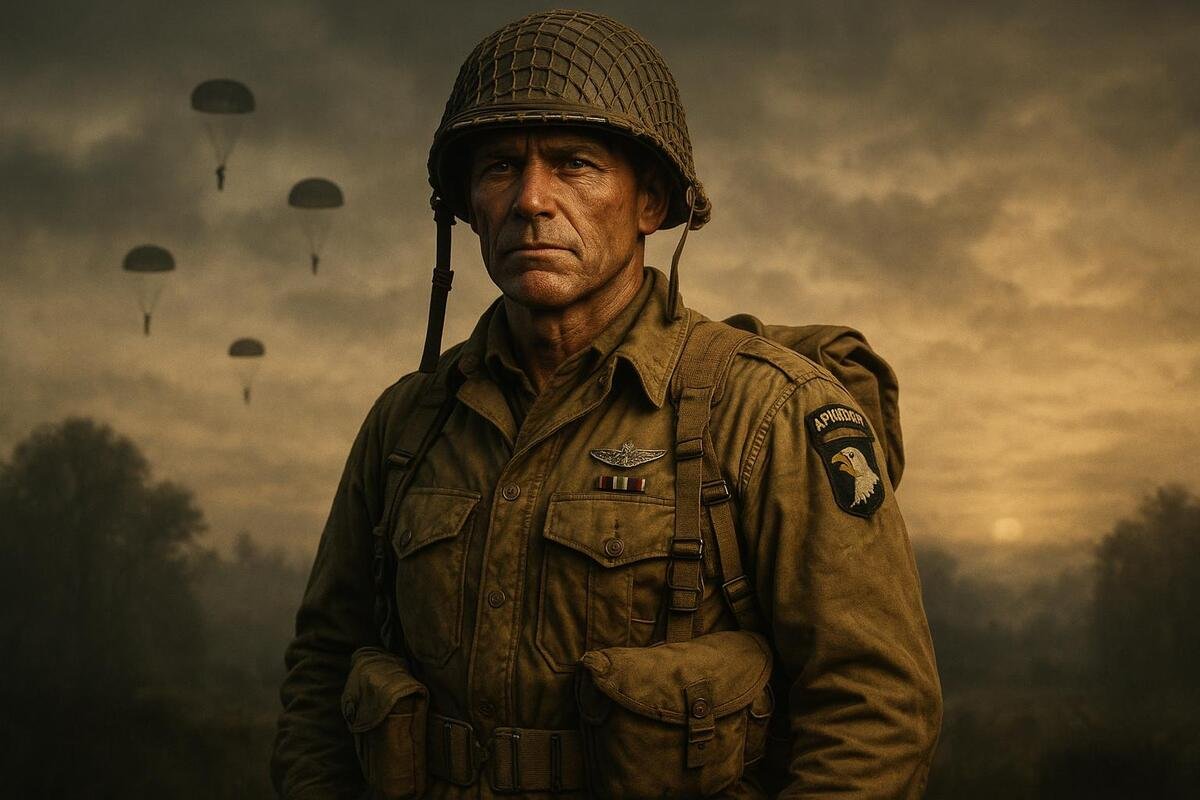
Heyliger’s military career began with his assignment to the 506th Parachute Infantry Regiment. He joined the now-famous Easy Company, a unit of the 101st Airborne Division, before they shipped out to Europe.
His journey with the “Screaming Eagles” would see him participate in some of the most pivotal moments of the war in the European theater.
From D-Day to Command
Moose Heyliger was not just a soldier; he was a natural leader. He jumped into Normandy on D-Day, beginning his trial by fire. His calm demeanor and tactical skill quickly earned him respect.
After the Normandy campaign, Heyliger’s leadership qualities led to his promotion. He eventually took command of Easy Company, following in the footsteps of the legendary Richard Winters.
Operation Pegasus: A Daring Rescue
One of Moose Heyliger’s most significant achievements was leading Operation Pegasus in October 1944. This daring mission involved crossing enemy lines to rescue 138 stranded British paratroopers.
His successful leadership in this complex operation earned him the British Military Cross, a testament to his bravery and strategic mind.
The Tragic Twist of Fate
Heyliger’s combat career was cut short by a tragic incident of friendly fire. The event was a stark reminder of the chaotic and unpredictable nature of war, where danger could come from any direction.
This single moment would alter the course of his life, sending him on a long and difficult road to recovery.
A Fateful Night and a Forgotten Password
On the night of October 31, 1944, while on patrol with Richard Winters, Heyliger was shot by a nervous American sentry. In a moment of confusion, he had forgotten the day’s password.
The sentry, a fellow soldier worn down by the stresses of combat, fired his weapon. The incident was a chain of unfortunate mistakes, a tragedy that left a deep impact on everyone involved.
Life Beyond the Battlefield
After months of painful recovery, including skin and nerve grafts, Moose Heyliger was honorably discharged from the Army in 1947. He returned to his home in Massachusetts, a decorated hero facing a new chapter.
His transition back to civilian life saw him reconnect with his early love for the natural world, a passion that would define his post-war years.
A Return to Civilian Life and a Love for Nature
Heyliger enrolled at the University of Massachusetts, earning a degree in ornamental horticulture in 1950. He built a life far from the battlefields of Europe, working with the earth and finding peace in nature.
He was known as a wanderer, a man who dreamed of owning land in every state. This quiet, gentle giant, who had commanded men in battle, now found solace in the tranquility of the American landscape.
The Enduring Legacy of Moose Heyliger
Though he rarely spoke of his wartime experiences, Moose Heyliger’s legacy of service and sacrifice lives on. His story, immortalized in the “Band of Brothers” series, continues to inspire new generations.
He was a man who, in the words of his grandson, “loved his country, loved serving in the Army and his fellow Soldiers.”
A Family’s Pride and a Lasting Inspiration
Heyliger’s legacy is carried on by his family, particularly his grandson, Mark Heyliger, who was inspired to follow in his grandfather’s footsteps and serve in the U.S. Army.
Moose Heyliger passed away in 2001, but his story remains a powerful example of the quiet heroism and enduring spirit of the Greatest Generation.